Private Jets Are Flying High

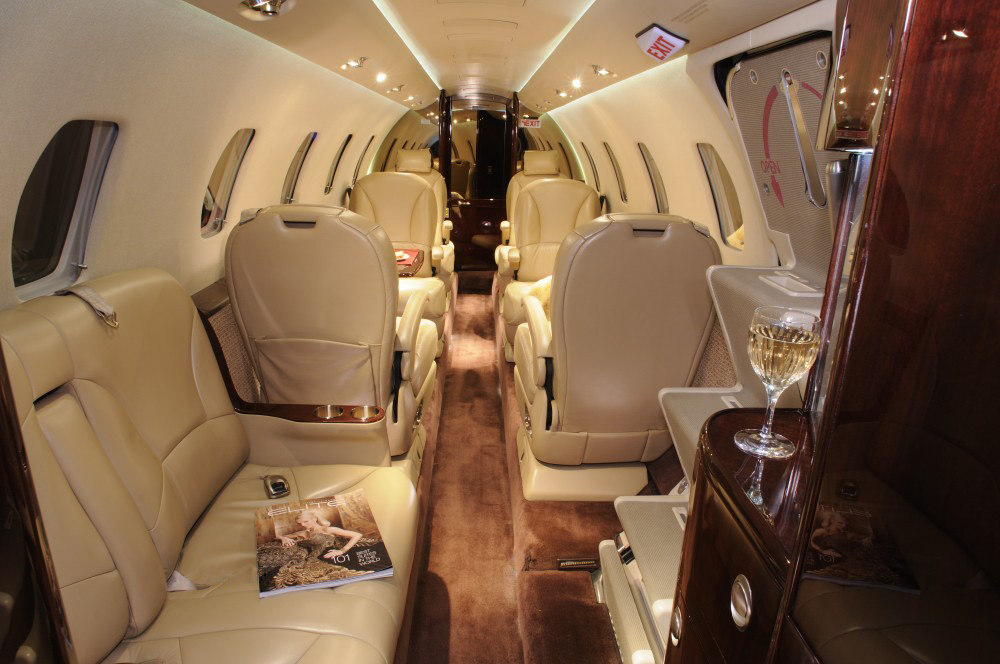
Citation-XLS

General Aviation, the umbrella industry that covers private jet use contributes $150 billion a year and 1.2 million jobs for the U.S. economy and is one of the few industries that contributes to the economies of all 50 states. The ignition point for use of private jets is generally business, and then the adjunct is leisure, with many times missions getting combined. National Business Aviation Association research pegs private jet users as making some 41 trips per year, or over 100 flights.  In other words, the private jet is both board room and family gathering place.


You can ask, “How does one mix business and leisure?”


Let’s say you’re visiting factory locations in provincial France, Germany and Italy over the course of two weeks. A private jet enables you fly into one of 3,900 airports in Europe near to the location in time for a tour of the location and a full day’s business meetings, then jet off to the next regional airport without a connection. Perhaps you have meetings Monday and Tuesday, but nothing scheduled for Wednesday. You take the jet to London or Paris to check out a top restaurant you read about, or maybe to do a bit of shopping.


What to do on the weekend? Maybe the spouses fly to London for the weekend to meet for some theatre and shopping.


While some might criticize this as an unneeded folly by those that have too much money, let’s remember we live in a service driven economy. If one considers that the Top 0.1 Percent of U.S. taxpayers, a mere 117,000 households, contributed some $214 billion to the economy last year via luxury lifestyle purchases (in addition to the $150 billion figure for private aircraft use), I say keep spending. Others will disagree, but that’s not the point of this piece. This piece is for luxury marketers who are looking for where they can efficiently reach more high spending prospects.


Recently Bloomberg published an article about an increase in private jet use for leisure by the CEOs of publicly traded companies. I was not surprised.


Honeywell forecasts in the next 10 years 9,250 new private jets worth over $250 billion will be delivered. Bombardier puts its forecast at 24,000 new private jets delivered in the next 20 years valued at $650 billion.


Last year was the second best year in the history of private aircraft deliveries. According to the General Aviation Manufacturers Association the keys to $22.8 billion dollars in shiny new airplanes were handed over in 2013. To put that in perspective, it was just behind the 2008 record of $23.8 billion. More interestingly, the 2010 post-recession low of $18.6 billion in new deliveries was the industry’s seventh best year since they started keeping records in 1964. As recently as 2003, annual deliveries were less than $10 billion.


As luxury marketers look for ways to target the upper echelons of the 1 Percent, private jets are a good place to find them. About 750 private jets were in Louisville this past weekend for The Kentucky Derby, and as one person told me, “There was plenty of money.”


After all, if you could afford a car, would you walk? Simply put, private jets are the “chariot of choice” for the Ultra High Net Worth, Super Rich or top luxury customers. I think the saying is, “Fish where the fish are.”

Posted in Marketing, Media, Research | Tagged , , , , , , , | Leave a comment

What’s the Best Media to Market Luxury?

1-PZmLbrLE-Gjs5yraBm78gw

What’s the Best Media to Market Luxury?

Like baking a cake, it clearly is a mix of ingredients.

A recent Boston Consulting Group Altagamma piece titled True-Luxury Global Consumer offered some insights.

First, who was surveyed?

The survey included 10,000 consumers who averaged just over $10,000 in annual spending on luxury across 10 countries. Included in the $10,000 of spending were Accessories, Apparel, Watch & Jewelry, Cosmetic, Furniture, Food & Wine, and Hotels and Exclusive Vacations.


There is very good news for magazine publishers, who might well quote Mark Twain in saying, “Reports of my death have been greatly exaggerated.”


Answering the question, “Which of the following usually has an impact on your purchase decision” magazines topped the list in the U.S. and globally. Store Browsing and Brand Websites were next in perhaps an ode to the brand temples that have emerged around the globe.  And not surprisingly “Word of Mouth” was high on the list, meaning happy customers are a key to gaining new customers.


I think the most interesting data point I saw was around Events. Luxury companies pour countless millions into events mostly getting somewhere between 50 and 250 people to show up.

In the U.S. only 13 percent of those responding said attending events influenced their purchase. In a strange twist 27 percent said getting invited to an event positively influenced them. What does it mean?  Possibly sending invites and then hoping people don’t come works better than having them show up.

Doing some math, an ad seen in magazine reaching 400,000 readers would influence around 200,000 readers (using the BCG mark of 50 percent) towards purchase whereas an event for 200 guests would sway 26 (based on BCG’s 13 percent).  Why the love affair for events?  My guess is it is easier to track ROI on purchases from events than magazine advertising. At the end of the day, I think it’s a point worth considering.


Full results below:

Media Type Worldwide USA
Magazines 50.00% 49.00%
Store Browsing 39.00% 40.00%
Brand Websites 34.00% 34.00%
Word Of Mouth 32.00% 39.00%
TV & Movies 24.00% 16.00%
Invitations 22.00% 27.00%
Events 20.00% 13.00%
Celebrities 20.00% 13.00%
Seen Wore 20.00% 21.00%
Social Media 11.00% 9.00%
Source:   Boston Consulting Group 2014
Posted in Cruises, Fashion, Home Furnishings/Shelter, Hotels, Jewelry, Marketing, Media, Research, Shelter, Spa, Watches, Wines/Spirits | Tagged , , , , , , , , , , , , , , | 6 Comments

Do The Super Rich Know What You Are Selling?

rich-people-dogs

Do The Super Rich Know What Your Are Selling?

“The Super Rich already know us.” It’s one I hear quite a bit when I speak with purveyors of luxury goods and services. There is an urgency to get the word out to a broader audience of aspirational consumers with the belief that Ultra High Net Worth prospects already have some type of intimate knowledge of what they are selling. It’s as if billionaires and centimillionaires wake up in the morning wondering what new luxury products have been launched lately.


Truth or Myth?


I’m going to say Myth.


First of all, around 90 percent of Ultra High Net Worths (UHNWs) are self-made, first-generation wealth. In The Sky’s The Limit only 2.9 percent of private jet owners we surveyed became rich via inheriting their money. Many came from middle class households. (See five Super Rich Americans who started out super poor). Dad might have been a bus driver or factory worker, mom a teacher or nurse. Wealth was created via business success or innovation. There were no father and son trips to Hermes to buy new saddles before heading to the club. More likely mom was taking the future UHNW to soccer games in a minivan while dad was painting the house.


Today’s UHNW was never the aspirational consumer flipping through fashion magazines in their cubicle. As they built their business, every extra dollar was plowed into the business. During school breaks, vacations meant the kids came to work in the warehouse. The spouse helped in the business, and her shopping was probably buying new computer equipment online, not shoes.  There are many stories about today’s very rich having to borrow money from friends and family to make it through the early years.


Somewhere between age 30 and 50 these folks crossed the chasm that separates being UHNW from aspirational wealth. Today’s UHNW didn’t grow up shopping to impress other people. There was no need to wear Gucci loafers at the factory. Now they are the ones with the money. In fact, since 2009 the Top 1 Percent, the rich have gotten richer, having gained 95 percent of income increases, according UC Berkeley researcher Emanuel Saez.  Their new found lifestyle means they are active in luxury, having time and taking time to vacation, often working it in with business and investment opportunities, flying on their private jet, pursuing hobbies and passions, going to places where a nicer wardrobe and some upgrades are needed. Research by Harrison Group suggests this socialization into luxury trappings and preferences is a five to 15 year process, providing a nice window of opportunity for marketers.  In some cases it never stops.  Carl Icahn was in his 60s when he bought his first super yacht although he could have afforded to buy one for many years before.


My take:


The Super Rich know less about your product or service than you think. While they weren’t thinking about you as they were making their money, you have been busy the last decade or so churning out innovative products and experiences, line extensions and so forth. After all, it wasn’t that long ago Montblanc, as an example, just made pens. Now a large part of their business is mechanical watches, they have a jewelry line and accessories such as briefcases and luggage. It’s only in recent years Louis Vuitton launched high jewelry, high-end mechanical timepieces and menswear. The Super Rich don’t wake up in the morning and think about what new product launches you just had. So while UHNWs may know the brand, they might not know everything you do.


At the same time they are the segment with the most money. They already spend lots of money with you or your competitors, but they have the depth of wallet to spend more. To me, that’s an opportunity. This goes for every segment. How many people who have the money have chartered a yacht? How many Super Rich people know the full range of spa experiences? It seems like there is a new concept every month. For that matter, destinations are constantly evolving their offerings. Fine dining in Australia? How many rich people have never had an Italian hand stitched suit made custom? Why doesn’t Bill Gates appreciate the complex mathematical concepts behind mechanical watches? After all, Microsoft and minute repeaters are both the works of genius.


I think it’s important to state luxury industry and brands have done a phenomenal job developing lots of infrequent buyers, the aspirational consumer, who spends money they really don’t have to create an image of status not matched by their bank accounts. According to Boston Consulting Group there are 350 million aspirational luxury consumers worldwide that account for $620 billion in global sales, or about $1,700 in total luxury purchases annually per household.


In terms of growth opportunities, my point is there are untapped opportunities with UHNWs.


How much do your top 50,100 or 500 customers spend annually?


How would you like to get 25, 50 or 100 new customers who have the same spending power?


While every brand has its fans and advocates, there are lots of Super Rich folks out there that could spend a lot more. The opportunity is to make them aware of all the great products and services you have.

Posted in Auto, Fashion, Home Furnishings/Shelter, Hotels, Jewelry, Marketing, Research, Shelter, Spa, Uncategorized, Watches, Yachts | Tagged , , , , , , , , , | 4 Comments

“Lies, Damned Lies and Statistics”

images-2

When I ran the numbers for The Top 0.1 Percent Spent $214 Billion on Lifestyle and Luxury in 2013 in leisure hotel and resort stays from our previous research it showed that these Ultra High Net Worth consumers spend over $12 billion annually sleeping in nice beds not their own. The research was from interviews with 661 private jet and fractional jet owners published in “The Sky’s the Limit” and projected against a universe of 117,000 households to represent the Top 0.1 Percent,


Responding from Singapore, The Leading Hotels of the World CEO Ted Teng noted that Smith Travel Research pegs total room revenue for the 5,000 properties they classify as luxury at around $60 billion.  Luxury hotels often get quite a bit of additional revenue, depending on size and location from dining, banquets, meetings, spas and activities.  Smith doesn’t track this extra revenue but Teng estimates its is an additional $25 billion making total annual sales around $85 billion.

Now to the details:

–       65.4% stayed of the audience we surveyed stayed in a hotel or resort for leisure in the previous 12 months
–       Those that stayed spent an average $157,000 for the year
–       We didn’t ask them to break out room versus overall folio, so we can make an assumption respondents were estimating their total spend over multiple stays
–       To make the projection I took the population of 117,000 households, then multiplied it times .654 usage, and then multiplied it again by $157,000 and I got a result slightly over $12 billion.

But as Mark Twain among others said, “there are lies, damn lies and statistics.”  So with Teng’s prodding I delved a bit deeper.

We are really talking about the spending of 76,518 households (117,000 x 65.4%) that perhaps spend $12 billion. 

So how about this scenario:  Five three-night stays and four one-week stays?  That would be 43 nights per year in a hotel or resort for leisure.  Multiply 76,518 x 43 = 3,290,274 nights at a hotel.  If we then take $12 billion and divide it by the nights spent, we get $3,647 spent per night per household. 

In other research we’ve done with private jet travelers – the same income demographic as the Top 0.1 Percent we found they take an average of 4.1 suites and rooms per stay making our assumptions seem quite realistic, particularly if we believe respondents also included dining, concierge services, mini bar charges and the like.

Teng also pointed out it could be some of their stays take place at hotels not classified as luxury by Smith, for example Westin, Hilton and Sheraton. 

The more I took a look at how these numbers project out I think they are probably in the ballpark. To get a broader read on the impact of the Super Rich on high end hotels we would also have to look at business and meetings travel. Either way, it means a very small segment of the luxury consumer population is responsible for a large chunk of spending in luxury properties.

What do you think?

Posted in Hotels, Marketing, Research | Tagged , , , , , , , , , , , , | Leave a comment

How Should Luxury Marketers Look at the Wealth Gap?


According to a Bloomberg BusinessWeek analysis of data compiled by Emmanuel Saez and Gabriel Zucman the break out of Net Worth and Household Income goes something like this:


The Top 1 Percent:

–       11,700 households with an Average Net Worth of $760 million with an Average Household Income of $30 million

–       105,300 households with an Average Net Worth of $79 million with an Average Household Income of $6 million

–       1,053,000 households with an Average Net Worth of $13.9 million with an Average Household Income of over $ 1 million


The Next 9 Percent:

–       10,530,000 households with an Average Net Worth of $2.6 million with a Household Income of $150,00 to $400,000


The Bottom 90 Percent:

–       105,300,000 households with an Average Net Worth of $194,200 with a Household Income of under $150,000


The Average Household Income the first group is around $30 million, the second group has an Average Household Income of just over $6 million and for the third group, rounding out the “Top 1 Percent” the Average Household Income is just over $1 million, but the entry point is $400,000.


If you are looking for a steady stream of big spenders, you need to target the first two levels, the Top 0.1 Percent making up some 117,000 households.


The next group of 1,053,000 households lives a nice lifestyle but with real life constraints. Being sort of rich can be expensive and actually leaves one a bit tight on cash. Think about the book pre-recession book Trading Up where one can buy a $15,000 watch, but at the expense of a nice vacation. It’s all about choices.


The 10,530,000 households that make up the Mass Affluent or The Next 9 Percent and have a $1 million + Net Worth but a Household Income of under $400,000 and get there by saving, saving and saving. What’s more they have little liquidity with a large part of their Net Worth tied up in non-liquid assets such as their principal residence and retirement funds. As you go down the 9 Percent spending power dries up considerably. Think about the book The Millionaire Next Door. These households are a are good target for marketers who offer “luxury for less” and non-luxury marketers. In a world of “mix and match” these consumers are pretty thoroughly matching. Perhaps a nice handbag or a pair of shoes now and then, but always on the lookout to get the “look for less.” Some however eschew luxury all together to better save.


What the research by UC Berkeley’s Emmanuel Saez and Gabriel Zucman shows is the Top 1/10th of The 1 Percent, 117,000 households, is the best target for luxury marketers who are seeking repeat customers. Going to the next 9/10th of the Top 1 Percent (slightly over 1 million households) probably means you will gain sales within a standard replacement cycle of car leases, furniture wearing out, stoves breaking and significant birthdays and anniversaries.


One needs to also look at the cost of reaching the 10 million + households in The Next 9 Percent versus the opportunity gain more sales, larger sales and more liquid customers by shooting a bit higher.


Putting it simply, if you ask your media buyer to scrutinize media against reach to an audience with at least a $1 million Household or $20 million Net Worth you will at least be spending your marketing dollars against an audience with enough discretionary spending power to make you happy.

Posted in Marketing, Media, Research, Uncategorized | Tagged , , , , , , , , | Leave a comment

The Top 0.1 Percent Spent $214 Billion on Lifestyle and Luxury in 2013

images


Looking at research on luxury and lifestyle spending by Ultra High Net Worth families and layering it against recently released research on how much the Top 0.1 percent make, I estimate these 117,000 households contributed $214 billion to the economy last year.

Analysis by Sadoff Investment Research of University of California, Berkley’s Emmanuel Saez study of U.S. income tax returns reveals the Top 0.1 percent have an Average Household Income of $6,373,782.

So where does it go?

According to a study by The Washington Post of households with a $250,000 income, after taxes, mortgages, child care, electricity, water, phone service and other necessities they probably have about $15,000 a year to spend on leisure and luxuries, including clothing.

The Top 0.1% of American earners represents some 117,000 households (117 million x 1/10th of 1 percent). We also know from Saez that since 2009, the Top 1 percent of gained 95 percent of all income gains, and luxury autos, fashion, watches and hotel revenue has continued to grow. In fact, 2013 marked the second highest year in history for the sale of new private jets at $23.4 billion.

With that in mind I thought it would be interesting to look at lifestyle spending research published in The Sky’s The Limit based on 661 private jet owners with a Median Net Worth of $41 million.

Not all of the Super Rich spend in all categories measured, but weighting the numbers and making the assumption since the lot of the very rich has only improved they are spending at least the same as they did in 2007, I worked out how much the Top 0.1 of American households percent contribute for various industries (chart below).

Based on my analysis, the Top 0.1 percent spent nearly $50 billion on making their homes nice, some $25 billion on fine jewelry, $19 billion having events and parties and $5.5 billion on watches among other things.  Moreover, they contributed over $12 billion to those who make their living getting us dressed.  All together, my estimates show the 117,000 top earning households in the U.S. put about $214 billion into the economy.


Category Amount Spent
Art $61,897,446,000
Home $47,370,258,000
Yachting $4,868,604,000
Jewelry $25,824,240,000
Cars $4,151,394,000
Events $19,236,672,000
Villas $5,444,712,000
Leisure Hotels $12,013,326,000
Watches $5,572,476,000
Cruises $3,326,076,000
Fashion $12,265,344,000
Spas/Spa Resorts $7,411,248,000
Adventure $1,891,890,000
Wine/Spirits $2,890,836,000
Annual Spend $214,164,522,000


Posted in Auto, Cruises, Fashion, Home Furnishings/Shelter, Hotels, Jewelry, Marketing, Research, Shelter, Spa, Watches, Wines/Spirits, Yachts | Tagged , , , , , , , , , , , , , , , , | 7 Comments

Do the Super Rich only drive Lamborghini’s and Ferrari’s?

Doug Gollan's avatarDoug Gollan: Selling to the Super Rich -- Ideas, Research and News for luxury marketers

Art Van Founder's Lakeside Mansion on Sale for $15.9 Million

The U.S. luxury auto market in 2013 accounted for 1,358,754 vehicles sold.

At the same time, depending on whose research you look at Ultra High Net Worth (UHNW) families (generally defined as having a Net Worth of at least $30 million) have a combined Net Worth of between $30 trillion and $50 trillion (U.S. debt is $16.9 trillion). Again, depending on various reports there are between 120,000 and 200,000 families that fit the criteria. So no matter whose research you look at, money is not an object.

Elite Traveler, the magazine I co-founded in 2001 and is distributed aboard private jets, has slightly over 400,000 readers who have a Household Income of $1 million per year. Our research, conducted by R.A. Prince & Associates, shows these readers own or lease an average of 4.4 vehicles, so in total they account for 1.76 million vehicles. Additionally, we know 85 percent buy or…

View original post 368 more words

Posted in Uncategorized | Leave a comment

Seeing Deep Pockets at Sea

Super-yacht-charter-1


So you thought you had a bunch of bills to pay? We all know that feeling when we have to fix the deck or refurnish the basement.


According to The 2013 (Super) Yacht Index published by Camper & Nicholsons International in conjunction with Superyacht News there 6,290 super yachts, defined as being at least 24 meters or 78 feet long. Despite the recession, the fleet has grown considerably from 4,400 in 2007. Prices for a yacht can range $5 million to $200 million or more, and operating costs are by the standards of most bank accounts amazingly expensive.


An article by The Wall Street Journal noted it can cost over $2,000 per hour just idling the engine at the dock, and filling the tanks can cost over $600,000. Captains make over $25,000 per month while chefs can take home around $12,000 monthly. Monthly crew costs can run to $100,000 per month. Experts say budget an extra $50,000 per month for variance maintenance and compliance issues which pop up. By contrast port fees of several thousand dollars per day seem like a bargain.


The article notes the average yacht owner uses their yacht between three and five weeks per year. About 20 percent of the yachts are on available for charter. Needless to say, for luxury marketers looking for deep-pocketed prospects, looking out to sea, or the nearest super yacht marina, may be a good place to start.

Posted in Marketing, Media, Research | Tagged , , , , , , , , , , | Leave a comment

How far does $250,000 go?

42-20040359-258x300

In December 2010 The Washington Post engaged BDO USA to see how far a quarter million dollars pre-tax would go for a family of four living in selected affluent suburbs across the country. Keep in mind that while $250,000 does not put you in the Top 1 Percent it puts one solidly in The Next 9 Percent. Representing New York City was Huntington (where $250,000 puts one in the Top 7 Percent of earning households), Naperville (Top 4 Percent) was selected for Chicago, Pinecrest (Top 3 Percent) for Miami, Glendale (Top 4 Percent) for Los Angeles, Plano (Top4 Percent) for Dallas, and Bethesda, The District and Alexandria (Top 7 Percent) for the $250,000 earners working in Washington D.C.

The study was a follow-up to a blog post by University of Chicago Professor Todd Henderson who chronicled his own household’s battle to get by on $250,000 a year before taxes.

While both Henderson and The Washington Post study were motivated by proposed tax increases targeting households with $250,000 or more income, the spending overviews provide important data for marketers of luxury goods and services.

Simply put, with a Household Income of $250,000 the folks in Plano would have had $1,963 extra at the end of the year. However, every other household would have needed to make more than $250,000 to just break even. In fact, in Glendale to break even would take $269,833 while in Huntington break even is $277,380.

But where did the money go?

The study took into account Health Care ($13,282) including Medical at 30 percent of total cost, out-of-pocket co-pays and Dental Costs; Child Care ($19,000) including day care, babysitting, camp and after school activities; Utilities ($8,292) including gas and electricity, phone, cable, internet and water; Food and Staples calculated at $13,659 for food and household supplies, $25 per week for take-out meals and $10 per week for lunches at work. Student loans were calculated at $6,000 per year, a reasonable about when there is $1.2 trillion in student loan debt floating out there. Housing expenses varied by city, included mortgage, insurance, maintenance and cleaning, plus property taxes and other city, state and federal taxes were accounted for as well as retirement and college savings.

So what’s left for luxury goods and services?

– One family trip for $4,000
– Eating out for the year at $2,400
– All gifts for holidays and celebrations at $3,000
– Tickets for movies, sports, theatre, events at $2,693
– Entertaining at home at $1,500
– Dog at $1,571
– Car payments for two cars at approximately $7,500, or $312 per month per car

While one might want to forgo having friends over to save $1,500 that can then be used for a vacation, or instead of taking a vacation, one could buy their spouse a watch or piece of jewelry not exceeding $4,000, it is hard not to conclude that for households in The Next 9 Percent, any taste of luxury they want comes at the expense of something else.

Moreover, it is clear that at very best, when the stars align (the deck doesn’t need to be repaired), these households are sporadic purchasers of luxury, and not Heavy Users.

Posted in Marketing, Research | Tagged , , , , , , , , | 9 Comments

What does it take to be in the 1 Percent where you live?

images-1

The United States has 117 million households according to the latest U.S. Census Data. That would mean 1 percent of households represents 1.17 million households.


The New York Times published an interactive map based on University of Minnesota data that enables you to enter a household income and seeing where you would fall in 344 zones across the country.


While nationally, to be among the top 1 percent of earners you need a $400,000 household income, to be part of the “wealthy” in New York Metro you need $609,000 Household Income; to be in the 1 percent in Orange County, California you need $500,000, and yet in Flint, Michigan $250,000 gets you in the top 1 percent.


On the reverse, in Stamford, CT $250,000 merely puts you in the top 19 percent and even at $400,000 per year residents of the Manhattan suburb would only just make it into the top 10 percent.


See for yourself at The New York Times.


For marketers that buy national media, the numbers are worth thinking about, particularly when one considers the 2013 Ipsos Affluent Survey which studies only homes with a $100,000 + household income and covers 135 magazines found 0 publications with a Median Household Income even touching $250,000.

Posted in Marketing, Media, Research | Tagged , , , , , , , , | 16 Comments

Do the Super Rich only drive Lamborghinis and Ferraris?

Art Van Founder's Lakeside Mansion on Sale for $15.9 Million

The U.S. luxury auto market in 2013 accounted for 1,358,754 vehicles sold.

At the same time, depending on whose research you look at Ultra High Net Worth (UHNW) families (generally defined as having a Net Worth of at least $30 million) have a combined Net Worth of between $30 trillion and $50 trillion (U.S. debt is $16.9 trillion). Again, depending on various reports there are between 120,000 and 200,000 families that fit the criteria. So no matter whose research you look at, money is not an object.

Elite Traveler, the magazine I co-founded in 2001 and is distributed aboard private jets, has slightly over 400,000 readers who have a Household Income of $1 million per year. Our research, conducted by R.A. Prince & Associates, shows these readers own or lease an average of 4.4 vehicles, so in total they account for 1.76 million vehicles. Additionally, we know 85 percent buy or lease at least one new vehicle every two years. Simple math shows that would mean on an annual basis they buy or lease around 170,000 vehicles (85% x 400,000 divided by 2).

But what type of cars do the rich buy?

While the UHNW segment is a lucrative crowd, some marketers judge their products to be not high end enough for the Super Rich audience. At the recent New York Auto Show, one highly regarded auto executive who sells cars that range from $60,000 to over $200,000 relayed a story of how while attending a high end yacht show, a wealthy boat owner who drives only exotic cars told him, “If I was seen driving your car my friends would think my business is doing badly.”

Is this the rule or the exception?

A 2012 article in The Financial Times based on research by real estate consultancy Knight Frank stated UHNWs own between four and five homes, again meaning whether you want to use the low of 120,000 families or the high of 200,000, there are somewhere between 480,000 and 1,000,000 million UHNW driveways.   Again, using Elite Traveler research – a survey of over 200 private jet owners last August – 32 percent said they had purchased or leased cars they read about in our magazine. This is not all of their purchases, just the ones they made in someway because of something they read in Elite Traveler. Projecting that against our over 400,000 $1 million + earners it would equate to 128,000 vehicles.

According to Motor Authority, 2,121 Lamborghinis were sold worldwide in 2013. Autoevolution.com reports 6,922 Ferraris were sold last year. Bentley sold 10,120 vehicles. Rolls Royce sold 3,575 last year, again worldwide. The total works out 22,738 worldwide units out of 1,358,754 luxury autos sold just in the U.S. and clearly just a fraction of what UHNW consumers buy each year.

Any way you look at it, the Super Rich are buying hundreds of thousands of luxury cars each year not named Ferrari, Lamborghini, Bentley or Rolls Royce. Considering luxury auto purchases are often influenced by what the boss is driving, there is a large opportunity for luxury producers to up their sales to UHNWs.

Posted in Marketing, Research | Tagged , , , , , , , , , , , , , , | 2 Comments