For The Titans Of Finance, Christmas Comes In The Spring

2_FullSizeRender

Black Friday.  Cyber Monday.  When most people think of the prime gift giving season, the Thanksgiving to Christmas dash with shopping carts stuffed full of video games, big screen televisions and coffee makers may come to mind.  And of course, that same period is a peak for luxury purchases as well.

In the world of the Super Rich, a second wave of interest generates in January as the big financial market players start announcing bonuses. However, some of the biggest sales are actually made in March, April and May.

“That’s because when you are buying multi-million jewelry you typically wait until the money is in your bank account,” said one jeweler who caters to the financial elite in the New York City area.

Joe Padulo, who founded “The One and Only One” marketing group that promotes seven figure colored diamonds noted last year one of his members sold a $4.5 million ring in April after a well rewarded hedge fund boss had his windfall safely in his bank account.

“It’s a big purchase, and they want to make sure they actually have the (bonus) money before they buy,” said the New York area jeweler, who asked not to be named.

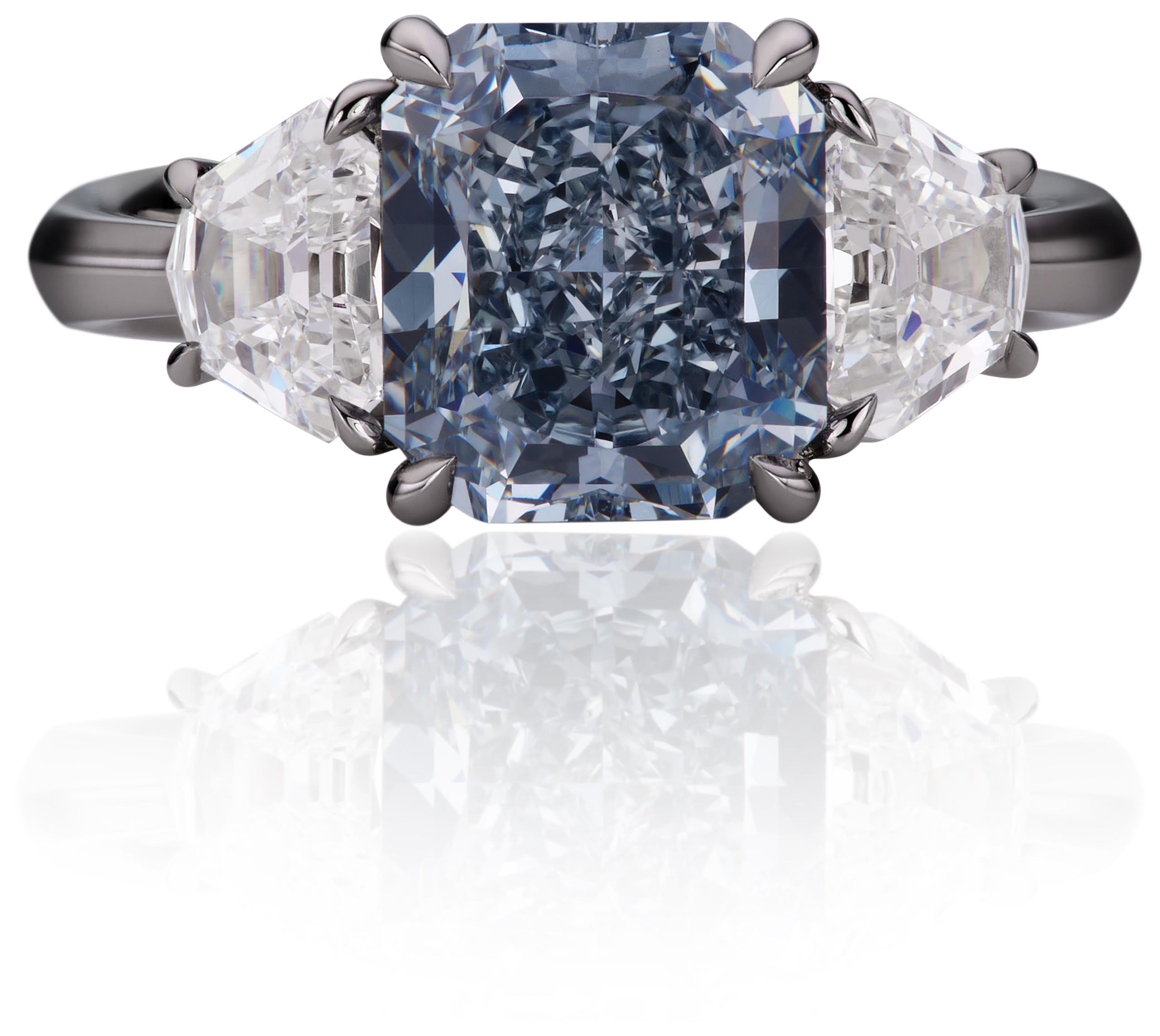
Fancy Intense Blue Diamond Ring

If the transactions take place in the Spring, how far in advance do the Super Rich actually decide on what they are going to buy?

In the 2007 book “The Sky’s the Limit: Marketing to the New Jet Set” based on over 600 interviews with private jet owners we identified three buying personalities for Ultra High Net Worth consumers. Winners, who represent 25 percent of fine jewelry purchasers, typically have specifics in mind months in advance having thought about ‘what they would buy’ when they achieved some desired success.

However, the jeweler I spoke with noted that many of his customers buying six and seven figure jewelry are more spur of the moment. The scenario, he said, is “(The customer) bought the newest Maserati, and all of sudden it occurs to him, ‘I better buy something for my wife.’”

Interestingly while the transactions for a ring or bracelet often cost more than the value of most people’s houses, the jeweler told me “90 percent of  (buyers)” aren’t fluent in the diamond industry’s complex lingo of cuts and grading, meaning trust is critical. “It’s not unusual for them to come back and tell me they checked to make sure they had gotten a fair price,” he said.

The price tag in the photo at the top of the page?  It’s from one of the rings that Padulo and his members were looking at this morning to include in an ad campaign that will run during the March/April period hoping to catch the attention of a Super Rich buyer.

The pictured ring?  It is an extremely rare Fancy Intense Blue Diamond, 3 carats, Radiant Cut, GIA-rated Internally Flawless. Set in a platinum ring with white diamonds. Suggested Retail Price: $4.65 million.  To request an appointment visit TheOneAndOnlyOne.com.

Posted in Auto, Jewelry, Marketing, Media, Research | Tagged , , , , , , , | Leave a comment

What Do Billionaires Want?

Doug Gollan's avatarDoug Gollan: Selling to the Super Rich -- Ideas, Research and News for luxury marketers

Airbus A380 Interior 05

Ledbury Research on behalf of Airbus Corporate Jets (ACJ) recently published a Billionaires Study in which they dredged through any information they could find on 250 of these 10 digit wonders from China, Middle East and Russia in an effort to better understand their lifestyles. They then conducted 25 in-depth interviews with service providers and experts across 10 sectors, including jets, fashion, hotels, high-end stores and yachts. While I didn’t know I was part of such a select group, I can say I was flattered to be one of the interviewees so was looking forward to seeing the study which I received yesterday. I did not know the research was for Airbus until the end of the interview.

As background, most of us know Airbus as the commercial airplane manufacturer whose signature jet is the Airbus A380 which can hold up to 900 passengers. Single aisle models such as the…

View original post 1,188 more words

Posted in Uncategorized | Leave a comment

The Surprising Passion Points of the Super Rich

IMG_6026(pp_w629_h471)

Last Friday I was interviewing legendary travel agent Bill Fischer for a book I am working on called “Secrets of Selling to the Super Rich.” Earlier in the week another rendition of Art Basel Miami had just concluded where luxury brands were tripping over each other trying to find the billionaires among the posers and spending huge amounts of money to do so.

And while Art Basel, black tie galas and polo may fit the picture that luxury brands want to have of where ‘best customers’ can be found (and there are some at each), it was interesting that Fischer recently arranged a birthday trip for a billionaire client who wanted a private dinner with the Duck Dynasty crew in their warehouse.

The unnamed billionaire was an avid hunter (something I have found a pursuit of quite a few UHNWs) and was a loyal viewer of the guilty pleasure show. I guess it didn’t surprise me as 15 years ago when I was working on a project for The National Enquirer I learned that the down-market tabloid actually sold best in the most affluent neighborhoods.

So while caviar and the opera obviously attract Ultra High Net Worths, Fischer said he arranges trips around the world for Super Rich clients who are big wave surfers. His daughter Stacy Fischer says plans can change with weather patterns, and luckily her clients have their own private jets so it is only the land arrangements that have to be switched on the fly.

Family trips to Disney that range in the hundreds of thousands of dollars with private games with characters are also more typical than you may think.

It reminded me of an article I posted after Lewis Katz died in a plane crash earlier this year. It is a strong reminder that while nearly 90 percent of today’s Super Rich are self-made, coming from moderate means, much of luxe brand marketing still smacks of “Pretty Woman” stereotypes.

My own estimates peg that more than 90 percent of print, television, online and sponsorship media from luxury brands goes to consumers who have limited ability to buy, and then only from time to time at the lowest price points. (See the analysis by The Washington Post on how far $250,000 goes for the Mass Affluent).

For the book, I’ve also spoken with Stacy Small, the founder of Elite Travel International, a Los Angeles-based travel agency that counts Silicon Valley billionaires as clients, Michael Reslin, the U.S. boss for Italian tailor Caruso and Henry Kim, sales chief for WheelsUp among others.  The one thing their super rich clients have in common is money.  Other than that the interests of UHNWs are as diverse as you can get.

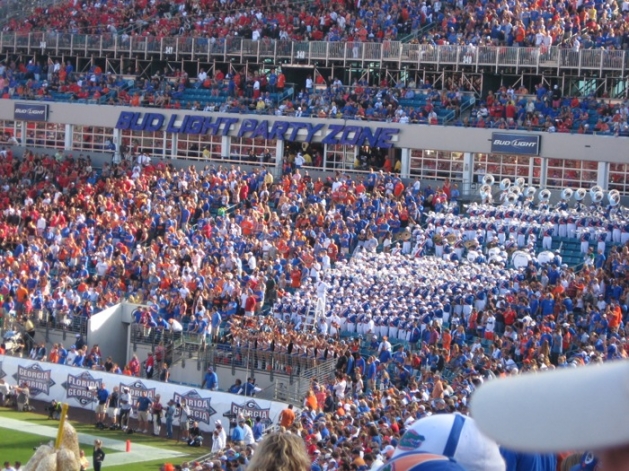
Saturday often means “tailgate” parties at college football games that can run into the hundreds of thousands of dollars, including tents with chandeliers and celebrity chefs.  Sundays mean an afternoon in a luxury box watching a pro football game.  The cost for a box for a single game can run in the tens of thousands of dollars.

Research by Wealth-X estimates that 211,000 Super Rich families spend over $235 billion on watches, jewelry, handbags, shoes, suits, cars, hotel suites, safaris and so forth. While private jet travel is a commonality for the UHNW family (Kim says being able to fly pets privately is often a justification for the expense) the other point is that the Super Rich are very hard to reach, and in fact their interests are much more diverse than many luxury brands may believe.

For marketers that want to get a larger share of all those billions of dollars, I would suggest that their UHNW marketing efforts may need a fresh look.

Posted in Fashion, Hotels, Jewelry, Marketing, Media, private jet, Watches | Tagged , , , , , , , | Leave a comment

Private Jet Charters Brought $867 Million To The Caribbean’s Top 10 Destinations Last Season

2011-01-24-jet

On the same day Unity Marketing issued its newest report that “(Mass) Affluents (under $400,000 household income) have new attitudes about their (limited) wealth and spending which translates into affluent austerity” private jet charter operator PrivateFly released an analysis of flight activity to the Caribbean tracking the jet stream of the Super Rich.

Pam Danzinger, the CEO of Unity warned luxury marketers, “The (mass) affluents worked hard to accumulate their wealth and financial status and aren’t about to let indulgent spending and giving into consumer temptation threaten that status.  They hold management positions in business and are the highest performers in their chosen professions.  They are the best-informed customers, aware of what’s happening on Wall Street, as well as ‘main street.’”

According to figures supplied by PrivateFly from WINGX, there were 12,566 charter flights to the 10 busiest Caribbean airports alone from November 2013 to April 2014, the high season for travel. Based on data from Prince & Associates showing that private jets bring an average of $69,000 in spend to the destinations they visit (excluding fuel and landing fees), private jet travelers brought some $867 million in spending to the destinations where the top 10 airports were located.

Carol Cork, PrivateFly’s marketing head notes that charter is only about one-third of private jet activity – the rest being owned jets and fractionally owned jets, so more likely elite travelers will again bring billions of dollars in spending to the Caribbean in the coming months.

Top destination was Nassau where private jet charter fliers alone brought $278 million. St Maarten is often a stopping off place for St. Barts, a popular villa destination and pick-up location for superyachts. Elite travelers drove $104 million in revenue to the island. Providenciales on Turks & Caicos gained $94 million from Ultra High Net Worth families arriving by private jet. When I visited earlier this year a private 727 with a family of 20 from Nebraska had just arrived to spend 10 days at Beaches. Luis Munoz Marin Airport in San Juan, one of four private jet airports serving Puerto Rico was the gateway for $88 million to enter the territory’s economy. Abaco in the Bahamas followed with elite travelers generating some $64 million for the economy with St. Thomas following at $56 million. Bermuda, North Eleuthra, Anguilla and Cayman followed.

When one considers the above numbers represent only 33 to 50 percent of total private aviation activity to the region and only the 10 busiest airports, it shows the huge opportunity for destinations and resorts to increase their share of Super Rich winter travel spending.

During Caribbean Week in New York earlier this year one Minister recalled how the crew of a megayacht spent $10,000 on flowers as they prepared the boat for the owner’s private jet arrival. In St. Maarten, former Primer Minister Sarah Westcot-Williams noted that an UHNW family renting a villa spent some $40,000 on flowers. Yes, flowers.

In another story of high spending, Roxanne Genier described how on a rainy day the owner of the superyacht she was working off popped off for some quick shopping and returned with a $200,000 bracelet.

 Top 10 Caribbean Airports –  Private Jet Arrivals (Charter Only)

Destination Airport Arrivals Value
Nassau Lynden Pindling 4,034 $278,346,000
St Maarten Princess Juliana 1,514 $104,466,000
Providenciales 1,374 $94,806,000
San Juan Luis Munoz Marin 1,276 $88,044,000
Abaco Marsh Harbour    930 $64,170,000
St. Thomas Cyril King    822 $56,718,000
Bermuda LF Wade    726 $50,094,000
North Eleuthra     654 $45,126,000
Anguilla Clayton Lloyds     630 $43,470,000
Cayman Owen Roberts     606 $41,814,000
 Private Jet Arrivals  12.566 $867,054,000

Source:  PrivateFly, WINGX

Posted in Jewelry, Media, private jet, Research, tourism, Touristm, Yachts | Tagged , , , , , | 1 Comment

7 Insights About Marketing to the Super Rich

img19826834

Having spent the first couple days of the week in Cannes, France at The International Luxury Travel Mart (#ILTM) I wish I had a Euro for each time the word experience or experiential was heard. Yes, I too would be rich.

While the show brings together mainly luxury hotels and travel agents who sell them, it also includes destinations, private jet charters, destination services, an array of vendors that cater to all ends of luxury and journalists. Thus most of the conversation and announcements tend to focus on general luxury.

I think it might be worth noting to show organizers that two weeks prior new research released by Wealth-X showed Ultra High Net Worth (UHNW) households (about 211,000 worldwide) spent $45 billion on luxury travel in 2013, 22.5 percent of the entire market. Oh, and the $45 billion doesn’t include $23 billion buying private jets and $22 billion on yachts! Of course with some $50 trillion in assets, the Super Rich define the term “deep pockets”

With that in mind, there were some points made at ILTM I thought of interest to folks selling to the Super Rich, hence my notes below:

1.  Do the Super Rich chase loyalty points and miles like the rest of us?

Having launched a points based rewards program in 2010 (Ritz-Carlton alongside Four Seasons and Mandarin Oriental had been a long time holdout) Ritz-Carlton Chief Sales & Marketing Officer Ed French says guests are breaking into two types. One segment is “very frequent users of multiple (Marriott) brands” and the other is the “core Ritz-Carlton loyalist” who wants the recognition but cares “less about the currency.”

2.  Picasso or Peyton Manning? What type of unique events do UHNWs prefer?

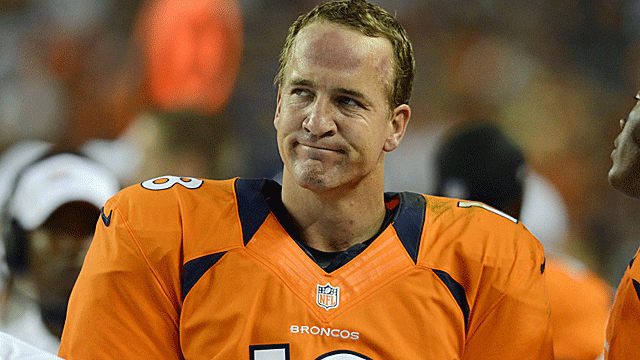
Ritz-Carlton top customers (read spenders) get access to limited attendance special events that they pay to participate in. Among offers that include sports, food and beverage, culinary and arts, sports is a strong number one in demand. A typical offering would be a Peyton Manning weekend at The Ritz-Carlton Denver.

3. Where can you find UHNWs?

Virtually anyone whose comments included the Super Rich agreed these creatures are global. Just because his or her travel agent is in Los Angeles, the UHNW is typically at some spot around the globe. French notes that while Puerto Rico’s core market is typically seen as the Eastern United States at his Ritz-Carlton Reserve resort in Dorado where guests pay $30,000 per night at its Mi Casa villa and other top suites run in the thousands guests are coming from around-the-world.

Paul James who heads Starwood’s luxury brands – The Luxury Collection, St. Regis and W – said Angola and Nepal have popped up as producing top spending customers.

My own belief is brands have yet to fully translate this understanding into their media strategy.

4.  My Dear Watson, Save the Demographics, It’s The Dollars in Your Wallet…

In what James referred to as “the death of demographics” he said it is no longer enough to talk about Boomers and Millennials. “It matters how much money you have, and how do you want to spend it,” he told the audience. As an example, at St. Regis Sanya a group of six people booked the Presidential Suite at $30,000 per night for three nights. They arrived on a superyacht and the General Manager expected an older male business titan. The group was “six girls having an 18th birthday party.” In another case a $20,000 per night suite was booked on the day of arrival from a mobile device. James said these examples are of the diversity of the Super Rich, how they move around the world and transact luxury purchases.

5.  For Marketers, Selling to the Super Rich is a Year Round Job….

Driving the luxury suite demand James says is a two-fold phenomena: the growth of the global Ultra High Net Worth traveler and the growth of very affluent populations in places like India, China and Brazil that travel at slightly different periods of the year than traditional affluent Americans and Europeans. The result is luxury hotels today operate “more efficiently” with “better staffing” as opposed to the days of distinct high and low seasons when luxury hotel staff resembled migrant workers moving from one place to another to serve champagne and changed the bed linens of royalty. It also means whatever time of year, for the most part, there are potential UHNW customers for the taking, somewhere in the world no matter where your business is based.

.

6.  Can the Suites Get Any Bigger or Grander?

While grand suites at one time were rarely occupied by paid guests, James said family travel is driving a new wave of demand. To that end one Caribbean resort is getting ready to unveil and 11-bedroom top floor suite, including two masters and covering 20,000 square feet. Think $50,000 per night.

The trend for capturing UHNW spend isn’t limited to just large properties. Small Luxury Hotels and Resorts has culled out its hotels with 10 rooms or less to market them for full takeovers, and at the same time Preferred Hotels & Resorts announced a new program Preferred Residences that sells hotel villas for those who want the space of a residence and services and amenities of a hotel. Of course a thick wallet is de rigeur.

7.  What excites the Super Rich?

At Elite Traveler early on we understood the stereotypes of who the super rich were and what they did were mainly incorrect (Think Downtown Abbey). I remember talking to a couple UHNW readers whose favorite part of our Top Suites features were the ‘who slept there.’ After all, how many people get to share a bed with Angelina Jolie or Brad Pitt, even if it’s not the same time. It’s only recently that marketers have begun to realize that the vast, vast majority of the Super Rich are what I call “driveway celebrities.” In other words, they made their money making widgets, in finance, selling cars, running fast food franchises or some mundane industry, and the only place they are “known” is with their friends and families in their own driveways or towns.

When Rosewood’s Le Crillon re-opens in Paris probably late next year it will feature two Karl Lagerfeld suites. And while yes, there are rich people who play polo, at least one on each team, and sit on museum and cultural center boards attending galas, the annual Iron Man Triathlon in Hawaii draws typically 20 to 30 private jets of Super Rich fitness warriors who are competing. Major college football teams such as University of Alabama, Texas, Notre Dame, LSU, Ohio State and so forth can get over a couple hundred private jets for a home game, about the same as Art Basel Miami. And don’t forget NASCAR or the Indy 500.

I thought it was insightful about how popular Peyton Manning is with Ritz-Carlton’s top customers. At the same time, Paul Kerr, the CEO of Small Luxury Hotels says his new program offering takeovers of smaller hotels, manors and castles means if you want, and you have the money, he can create your own Crawley family weekend, even if the next weekend you plan to go dirt biking in Baja or river fishing in Idaho.

Posted in Marketing, Media, Research | Tagged , , , , , , , | Leave a comment

Super Rich Luxury Spending Creates Over 5,000,000 Jobs….

colonne_boutique_vue_large

Ronald Reagan may have been wrong when his Budget Director espoused the ‘trickle down’ theory of economics. The theory was money kept by the rich through lower taxes “trickled down” to the less rich stimulating the economy. When it comes to jobs created by the Super Rich from buying luxury goods and services, it may actually be more like a waterfall than a drip.

Spending by the Super Rich on luxury items last year created over five million jobs worldwide, according to some back of the envelope math I’ve done.

As a comparison General Motors employs 212,000, General Electric 287,000, Microsoft 127,000, British Petroleum 80,000, FedEx 300,000, Starbucks 182,000, Boeing 169,000, Apple 50,000, Google 55,000, Facebook 8,300, Verizon 176,000, Nestle 339,000, Ford 164,000 and Samsung 222,000. Not shabby I’d say.

This has nothing to do with private or public companies the Super Rich started or own, charitable donations, foundations and grants and the like. It also excludes a multitude of service jobs such as real estate agents, home builders, architects, housekeepers, nannies, gardeners, drivers, accountants, teachers, tutors, doctors, lawyers, financial advisors and such that serve Ultra High Net Worth (UHNW) families.

My numbers are limited to spending totals released last month by Wealth-X that found 211,275 UHNW (Ultra High Net Worth) households worldwide spent $234 billion on travel, automobiles, art, jewelry, watches, fashion, accessories, home furnishings, wines, spirits, food, beauty, private jets and yachts. Wealth-X defines UHNW as individuals with assets of more than $30 million.

To arrive at my numbers, I used the Wealth-X spending numbers for each category. Wealth-X provided the percentage of luxury spending in each category they found UHNWs were responsible for.

For example, Wealth-X reported the Super Rich spent $45 billion on luxury travel in 2013, and that amount represented 22.5 percent of the total luxury travel market. This means, according to Wealth-X, luxury travel is a $200 billion portion of the travel industry. The World Travel & Tourism Council (WTTC) calculates the global travel industry is a $7 trillion business, creating directly 100.8 million jobs. If total luxury revenue ($200 billion) is 2.9 percent of total travel sales ($7 trillion), there are about 2.9 million jobs created by the luxury segment. UHNWs generated 22.5 percent of luxury travel revenue, meaning if there is a direct correlation between amount spent on all those suites, villas, safaris, ski trips and employment they created 658,333 jobs. I suppose one could argue serving the wealthy is more manpower intensive so the Super Rich could be responsible for a higher percentage of jobs than the percentage of revenue they produce. As I said, this is purely back of the envelope and provides an interesting starting point for discussion next time politicians or pundits attempt to shame the wealthy about what they buy.

I worked the math similarly with the auto category and came out that the $40 billion in luxury vehicles purchased by UHNWs generated 189,036 jobs out of the industry’s nine million. In the art world where the Super Rich spent $25 billion their spending accounts for 758,000 of two million worldwide jobs.

Private aviation was a bit trickier. The U.S. industry accounts for 52 percent of worldwide activity. Wealth-X has it that UHNWs spent $23 billion worldwide and account for 82 percent of activity. To get to the 1.88 million global jobs I credit to the Super Rich in the private jet segment I assumed that job creation was consistent on a worldwide basis meaning 2.29 million total jobs. I then multiplied by .82.

Wealth-X divided fashion and accessories into three different categories, but to get my numbers I combined the three. I then referenced figures from Fashion United that the total market from those bins at Wal-Mart to the eighth floor at Saks Fifth Avenue where designer shoes have their own zip code employs 75 million globally in a $1.7 trillion industry. T he luxury segment represents $172 billion, according to Wealth-X, and UHNW spending represented $28 billion, or 16.3 percent of the total. Throw that into a few columns in an excel spreadsheet, add appropriate formulas, stir and the Super Rich can take credit for 1.23 million jobs in global fashion.

There are 10 million people employed in the worldwide diamond industry, however only 30 percent of all diamonds are used for jewelry with the remainder having industrial uses, so I only attributed three million jewelry related jobs to the diamond industry. I couldn’t find any workable numbers for other types of precious stones. According to watch industry statistics some 50,000 people are employed making watches in Switzerland. Again, the worldwide watch industry is bigger so in using 3,050,000 as my global employment number for watches and jewelry I am probably understating things. When I crunched down the numbers to the share of jobs attributable to Super Rich spending it came to nearly a quarter million (246,371).

For the super yacht segment, a report by MYBA, the worldwide yachting association, attributes 30,000 jobs to building yachts in just five European countries which using the Wealth-X data that UHNWs account for 88 percent of superyacht revenue would mean 26,400 more jobs. But again, I am not taking into account building of superyachts in the U.S., Turkey and other places. A Financial Times report indicated superyacht crews earn about $2.1 billion per year. At an average of $50,000 per year that equates for 42,000 crew jobs, meaning all together UHNWs at least 63,360 direct jobs in the superyacht industry if not more.

I couldn’t get numbers I felt comfortable working through for Interior/Home, Wine/Spirits, Beauty and Food which account for $27 billion of the $234 billion Super Rich spending Wealth-X tracked. And obviously defining global revenue and employment in categories as diverse as travel or fashion is far from scientific for this exercise. That said, whether my figurers are a bit high or low (and remember the myriad of job categories I didn’t include), 5,029,317 jobs is significant.

To echo a point that Wealth-X President David Friedman makes the Super Rich with some $30 trillion in assets (some studies believe it is as high as $50 trillion) have the financial power to spend even more, something politicians perhaps should encourage through policy and luxury marketers should spend more time focused on.

Or put another way, luxury goods and services spending by the Super Rich contributes annually about the same number of jobs of 25 companies the size of General Motors.

Category UHNW Job Creation
Private Aviation 1,880,153
Fashion 1,234,064
Art 758,000
Travel 658,333
Jewelry/Watch 246,371
Auto 189,036
Yachting 63,360
Luxury UHNW Job Creation 5,029,317
Posted in Auto, Fashion, Home Furnishings/Shelter, Hotels, Jewelry, Marketing, Media, private jet, Research, Touristm, Watches, Wines/Spirits, Yachts | Tagged , , , , , | 4 Comments

In Search of Super Rich Customers? We Think You’ll Be Surprised…

bigginhill_olympics2012_traffic

Luxury marketers who want to capture their share of the $234 billion that 211,275 Ultra High Net Worth (UHNW) families spend annually on fashion, accessories, automobiles, jewelry, watches, home furnishings, wine and spirits need to look far and wide based on just released research by Wealth-X and UBS.

Slicing apart data from the 2014 World Ultra Wealth Report reveals if American states were viewed as countries, 23 of the top 50 Super Rich populations would be states. The report defines Super Rich/UHNW as $30 million + in assets.

Ranked alongside countries, California would be third in the world, New York sixth, Texas ninth and Florida 12th

Illinois (17th), Michigan (19th), Pennsylvania (21st), Ohio (23rd), Massachusetts (27th), Wisconsin (28th), Connecticut (31st), Maryland (32nd), Virginia (34th), Minnesota (35th), New Jersey (36th), Washington (39th), North Carolina (41st), Georgia (43rd), Tennessee (44th), Colorado (45th), Indiana (47th), Arizona (48th) and Oklahoma (49th) show that for marketers there are significant pockets of the Super Rich in the so-called “fly over” states.

Making the point Illinois ranks ahead of Italy (18th) in UHNW population, Michigan ahead of Spain (20th), Ohio in front of Saudi Arabia (23rd), Minnesota ahead of the United Arab Emirates (37th), Washington before Russia (40th) and Oklahoma ahead of Turkey (51st), Indonesia (52nd), Malaysia (53rd), Kuwait (56th) and South Africa (57th). Going further down the list South Carolina (85th) has more UHNW households than Israel (86th) and Montana (87th) beats Qatar (88th).

The survey found that UHNWs own just under three residences (2.7) and statistics from the National Business Aviation Association (NBAA) indicate private jet users average 41 trips and over 100 flights per year for a mix of business and pleasure meaning the target is always on the move.

From a marketing perspective, in my opinion, the data means that traditional local marketing and regional marketing miss a large portion of super rich prospects. Separate research by Knight Frank and others shows dramatic increases in international residential real estate purchases, while strong sales of luxury goods in the U.S. is partially attributed to foreign visitors.

For hotels that can break their budgets by selling more of their suite inventory and booking groups, jewelers and watchmakers who are selling expensive pieces, fashion houses, automakers and such, the two key takeaways are that the Super Rich have more money and are spending more money than ever, and traditional marketing approaches probably aren’t effective in reaching this fast moving and surprisingly spread-out target.

Click here for a break down on what the Super Rich are buying…


# Area 2014 2013
1 GERMANY 19095 17820
2 JAPAN 14720 14270
3 CALIFORNIA 13445 12560
4 UNITED KINGDOM 11510 10910
5 CHINA 11070 10675
6 NEW YORK 9530 8945
7 INDIA 8595 7850
8 SWITZERLAND 6635 6330
9 TEXAS 6510 6285
10 CANADA 5305 4980
11 FRANCE 4750 4490
12 FLORIDA 4710 4215
13 BRAZIL 4225 4015
14 AUSTRALIA 3580 3405
15 MEXICO 3470 3365
16 HONG KONG 3335 3180
17 ILLINOIS 2905 2770
18 ITALY 2295 2075
19 MICHIGAN 2125 1920
20 SPAIN 1800 1625
21 PENNSYLVANIA 1620 1570
22 NORWAY 1565 1450
23 OHIO 1505 1455
24 SAUDI ARABIA 1495 1360
25 SOUTH KOREA 1470 1390
26 REST LATIN AMERICA 1435 1415
27 MASSACHUSETTS 1410 1345
28 WISCONSIN 1400 1370
29 SINGAPORE 1395 1355
30 NETHERLANDS 1370 1290
31 CONNECTICUT 1365 1330
32 MARYLAND 1365 1280
33 TAIWAN 1315 1245
34 VIRGINIA 1310 1250
35 MINNESOTA 1285 1240
36 NEW JERSEY 1280 1235
37 UNITED ARAB EMIRATES 1275 1050
38 REST OF MIDDLE EAST 1245 1015
39 WASHINGTON 1240 1190
40 RUSSIA 1230 1180
41 NORTH CAROLINA 1195 1135
42 ARGENTINA 1185 1110
43 GEORGIA 1175 1125
44 TENNESSEE 1145 1050
45 COLORADO 1140 1085
46 SWEDEN 1130 1070
47 INDIANA 1105 1030
48 ARIZONA 1030 970
49 OKLAHOMA 935 890
50 PORTUGAL 930 870
51 TURKEY 915 900
52 INDONESIA 875 865
53 MALAYSIA 875 840
54 BELGIUM 870 810
55 POLAND 845 800
56 KUWAIT 835 845
57 SOUTH AFRICA 835 775
58 MISSOURI 825 800
59 DENMARK 825 740
60 THAILAND 735 720
61 LUXEMBOURG 725 660
62 PHILIPPINES 690 660
63 COLOMBIA 670 635
64 NIGERIA 645 600
65 IRELAND 610 580
66 ARKANSAS 595 550
67 EGYPT 595 510
68 AUSTRIA 590 565
69 KANSAS 575 550
70 GREECE 565 505
71 NEVADA 560 500
72 NEW ZEALAND 550 510
73 DISTRICT OF COLUMBIA 540 500
74 CHILE 515 515
75 PERU 515 470
76 UKRAINE 470 440
77 PAKISTAN 465 415
78 VENEZUELA 455 435
79 OREGON 435 410
80 FINLAND 435 400
81 LOUISIANA 420 400
82 KENTUCKY 415 385
83 ALABAMA 410 380
84 HUNGARY 405 400
85 SOUTH CAROLINA 385 365
86 ISRAEL 385 360
87 MONTANA 380 355
88 QATAR 375 345
89 WYOMING 350 315
90 REST OF ASIA 330 320
91 NEBRASKA 315 295
92 MISSISSIPPI 310 295
93 CZECH REPUBLIC 295 280
94 CROATIA 285 280
95 RHODE ISLAND 285 265
96 ECUADOR 280 265
97 REST OF AFRICA 265 255
98 DOMINICAN REPUBLIC 265 250
99 GUATEMALA 260 245
100 UTAH 250 225
101 BOLIVIA 245 205
102 HONDURAS 225 215
103 IOWA 225 210
104 WEST VIRGINIA 220 205
105 HAWAII 215 215
106 NICARAGUA 210 200
107 VIETNAM 210 195
108 IDAHO 205 190
109 NEW HAMPSHIRE 195 185
110 PARAGUAY 190 175
111 IRAQ 185 175
112 OMAN 180 150
1123 KENYA 170 155
114 SOUTH DAKOTA 170 150
115 EL SALVADOR 160 150
116 KAZAKHSTAN 140 130
117 NEW MEXICO 135 130
118 VERMONT 130 125
119 URUGUAY 125 120
120 PANAMA 120 115
121 TANZANIA 120 115
122 ANGOLA 115 110
123 PUERTO RICO 110 105
124 COSTA RICA 100 100
125 BANGLADESH 95 90
126 MAINE 95 85
127 UZBEKISTAN 90 85
128 SRI LANKA 80 75
129 NORTH DAKOTA 80 70
130 AZERBAIJAN 70 65
131 LIBYA 65 65
132 TUNISIA 65 65
133 DELAWARE 60 55
134 ETHIOPIA 60 55
135 ALASKA 50 50
136 TAJIKISTAN 45 45
137 CUBA 45 45
138 OTHER PACIFIC 40 40
139 MONGOLIA 35 35
140 ALGERIA 35 35
141 MOROCCO 35 35
Posted in Auto, Fashion, Home Furnishings/Shelter, Hotels, Investment, Jewelry, Marketing, private jet, Research, Touristm, Watches, Wines/Spirits | Tagged , , , , , , , , , | 3 Comments

Roman Holiday: Meet A Private Jet Flight Attendant For Pets

Doug Gollan's avatarDoug Gollan: Selling to the Super Rich -- Ideas, Research and News for luxury marketers

carol

American Express estimates Americans spend about $1,145 per human for the typical affluent family vacation.

But what about pets?

A cornerstone of this blog is the belief many companies are “under-marketing’ to The 1 Percent. At the top of the top end (where some 200,000 Ultra High Net Worth families control up to $50 trillion in wealth), there is more money to be spent, and it’s better being spent (for the other 99+ percent) to fulfill a perhaps previously unthought of need than sitting in a bank account.

One of my prouder moments was after a column I wrote for Elite Traveler. It was about why a $2 million party by an UHNW was anything but frivolous, and it stirred enough controversy I had a chance to go head-to-head with non-believer Bob Garfield at NPR, which was later covered in The Wall Street Journal by Robert Frank.

The biggest…

View original post 840 more words

Posted in Uncategorized | 1 Comment

The Super Rich Spent $234 Billion On Luxury; UHNWs Account For 19 Percent Of All Luxury Spending  

feat_hermes313_540_360_1001

Some 211,275 Super Rich households spent $234 billion on luxury purchases last year, accounting for 19 percent of all global luxury spending, according to data just released by research firm Wealth-X.

In a press interview Wealth-X President David Friedman said luxury brands shouldn’t look at what is being spent but untapped potential. He noted mass affluent consumers continue to pull back on spending yet luxury goods companies still are not taking advantage of additional spending power the Super Rich present. The report showed that share of luxury expenditures by Ultra High Net Worth (UHNW) families increased from 17 to 19 percent from 2012 to 2013.

Travel/Hospitality was top in spending at $45 billion, followed by automobiles at $40 billion, fashion (apparel and accessories) at $28 billion, jewelry/watches and art tied at $25 billion. Private jets totaled $23 billion in the report, followed by yachts at $22 billion, home and wines/spirits both at $8 billion and beauty at $4 billion.

The Wealth-X report shows that despite being about 0.004 percent of the world’s population this targeted group accounts for 35 percent of all luxury watch and jewelry purchases, 28 percent of all home purchases, 22.5 percent of all travel/hospitality spend, 20 percent of all luxury apparel, 14 percent of all luxury accessories, and 9 percent of all luxury cars.

The report also found the Super Rich own an average of 2.7 properties. Some 30 percent (over 70,000) of UHNWs have at least one residence outside their primary business country.

Category Annual Spent in Billions % Share of Luxury Market
Travel/Hospitality $ 45 billion 22.5 %
Automobiles $ 40 8.9 %
Art $ 25 37.9%
Jewelry/Watches $ 25 35.2%
Private Aviation $ 23 82.1%
Yachts $ 22 88.0%
Apparel $ 15 20.0%
Accessories $ 12 14.1%
Home $ 8 28.1%
Wines/Spirits $ 8 10.1%
Food $ 7 11.8%
Beauty $ 4 6.5%
Other Fashion $ 1 8.5%
Total $ 234 billion 18.9%

Source: Wealth-X

Posted in Auto, Fashion, Home Furnishings/Shelter, Hotels, Investment, Jewelry, Marketing, Media, private jet, Research, Shelter, Touristm, Watches, Wines/Spirits, Yachts | Tagged , , , , , , , , | 10 Comments

How far does $250,000 go?

Doug Gollan's avatarDoug Gollan: Selling to the Super Rich -- Ideas, Research and News for luxury marketers

42-20040359-258x300

In December 2010 The Washington Post engaged BDO USA to see how far a quarter million dollars pre-tax would go for a family of four living in selected affluent suburbs across the country. Keep in mind that while $250,000 does not put you in the Top 1 Percent it puts one solidly in The Next 9 Percent. Representing New York City was Huntington (where $250,000 puts one in the Top 7 Percent of earning households), Naperville (Top 4 Percent) was selected for Chicago, Pinecrest (Top 3 Percent) for Miami, Glendale (Top 4 Percent) for Los Angeles, Plano (Top4 Percent) for Dallas, and Bethesda, The District and Alexandria (Top 7 Percent) for the $250,000 earners working in Washington D.C.

The study was a follow-up to a blog post by University of Chicago Professor Todd Henderson who chronicled his own household’s battle to get by on $250,000 a year before…

View original post 383 more words

Posted in Uncategorized | 1 Comment

What Do Billionaires and The Rest of Us Have in Common? Perhaps Your CRM System!

1b58102

How well do you know your Super Rich customers?

Do you use CRM?

Do you track data about your billionaire customers in the same way you capture it from the rest of us who buy handbags and shirt pocket squares?

Or as a small company or an individual service provide perhaps you use MeRM? That’s my contribution to unnecessary acronyms by the way. It just means that you know your own customers well enough, including the ones likes red wine and the ones that smoke cigars.

If you are still trying to figure it out, you may not be alone. Wealth-X, a company that focuses on Ultra High Net Worth (UHNW) intelligence recently asked luxury brands around the world how they collect and use customer data to better market to the Super Rich. The survey included everything from sellers of yachts to handbags.

Below are the highlights:

For 56% of respondents, the biggest difficulty in collecting and using data was lack of resources.

75% of respondents said they relied on their internal research team to collect data, and only 40% used in- store information cards.

Only 50% of respondents said they used the data they collect to rate their customers.

Less than 50% of respondents use the data they collect for other purposes than improving individual contact with clients.

73% of respondents plan on improving their techniques for using data in the coming quarter — by collecting more or better data, or even by improving their current capacity to analyze data.

Only 40% of respondents use CRM integration to optimize the use of their data — however, even within the 60% that do not use CRM integration, its value was recognized, particularly with regards to its use in assessing the value of individual clients.

82% of respondents said that “data is instrumental in engaging and retaining UHNW clients”.

70% of respondents used the data they collect to improve the quality of their services — thereby hoping to build customer loyalty and stimulate demand.

The respondents felt that the most significant benefit of CRM was its use in tracking individual clients.

What’s not even clear is how effectively companies use the data they capture. While Neiman Marcus is famous for using sales data and rewarding customers for spending lots of money, it is widely thought that many of the big luxury conglomerates don’t share customer data between their various brands.

For the full report, http://www.wealthx.com/wp-content/uploads/2014/11/V4_LuxurySentimentSurveyReport1.pdf

What data would you like to know about your Ultra High Net Worth (UHNW) customers?

Posted in Media, Research | Tagged , | Leave a comment

Super Rich Folks Like To Mix With…

dsc00457

Turns out the Super Rich want to mix with, well, at least the next level of rich. Or at least some of the Super Rich do. When Four Seasons Hotels & Resorts launched around-the-world private jet tours with Seattle-based TCS Expeditions nearly two years ago, I for one suspected that they wouldn’t be a big draw with private jet owners. My thinking was multi-fold. The benefits of private jet ownership are being able to set your own schedule, closely control your environment including interior design of your jet in many cases, call the shots on the catering down to the smallest detail and of course decide who you want to fly with and who you don’t.

I also understand a large section of the private jet fleet isn’t suitable for round the world touring, but thinking about the above, by flying First Class on top commercial airlines one can keep their own schedule to a much larger degree than a pre-set private jet tour. What’s more, if you look at the First Class “suites” on Singapore Airlines or Emirates Airlines for example, they are more private than the configurations on these “elite” round-the-world journeys. And of course, if you want, you can stay at a Four Seasons as well, so while the curated trip sounded interesting, I saw no particular advantage for a private jet owner.

About a week ago I was in Orlando for the Grand Opening of the Four Seasons Resort at Disney World with a group of international journalists. During a session with Four Seasons Executive Vice President Susan Helstab, the round-the-world junkets came up as the hotel brand has now commissioned its owned branded Boeing 757, the trips having proved very popular that they are being expanded.

On the previous aircraft (the new one only seats 52), Helstab noted 10 of the 72 passengers on the first trip were private jet owners. While not a majority, the number was more significant than I expected. Speaking of not only the jet owners but the entire group, Helstab said the dynamic of being able to mix with other like minded folks was part of the what customers said was particularly appealing. The trips last for nearly three weeks and people are not required to stay with the journey the entire time, but she said that was a strong sense of group, with some participants even striking up conversations on business opportunities.

Cost for the trip is over $100,000 per person, so by definition there were few if any folks on the plane who were not at least High Net Worth (HNW is typically at least $1 million in net worth), although the profile of a private jet owner is typically $50 million + in net worth, squarely in the Ultra High Net Worth (UHNW) range which most studies start at $20 million or $30 million.

In retrospect, it shouldn’t have surprised me. The late Deborah Natansohn who was CEO of Seabourn Cruise Lines used to regularly tell me about UHNW private jet set types who would sail on her ships, many times not even in groups, but just as couples that enjoyed the shipboard society. I think the Four Seasons private jet trip is a good reminder for luxury marketers than in many cases, the only commonality between the Super Rich is that they are all super rich which means in terms of marketing you have to cast a wide net if you want to capture as many as possible, even if that seems like a bit of an oxymoron.

(Read my new book “23 Ways To Create More Sales Opportunities in 25 Minutes” by clicking here!)

Posted in Cruises, Marketing, Media, private jet, Research | Tagged , | 2 Comments

Up Close With The Super Rich: Tales From Life Aboard A Superyacht

Doug Gollan's avatarDoug Gollan: Selling to the Super Rich -- Ideas, Research and News for luxury marketers

url

The best place to study wild animals, the saying goes, is in the jungle, not the zoo. At the same time researching truly Ultra High Net Worths (UHNWs) is very difficult. Roxanne Génier spent time in the jungle of the Super Rich, working as crew aboard superyachts. Wealth Reporter Robert Frank wrote the ’must read’ book Richistan based on his time as an embedded reporter with with a selection of billionaires. Below Génier gives her observations on the way the 0.1 percent live during her time on the high seas and haute ports. I think it provides an excellent glimpse for anyone who is selling products or services to the very rich.

By Roxanne Génier

Guest Columnist

When you imagine getting a position as a crew member aboard a superyacht, you dream of exotic destinations, lavish surroundings and countless adventures. You envision yourself shaking hands with celebrities, having inspiring…

View original post 1,283 more words

Posted in Uncategorized | Leave a comment

The Secrets Of Four Seasons’ Super Service

four-seasons-around-the-world-tour


If you stay at a Four Seasons you may have wondered the secrets to providing great service in a diverse portfolio of more than 90 hotels and resorts spanning over 30 countries.


Service is so important J. Allen Smith, the CEO calls it his company’s “differentiator.” Unlike other service icons such as The Ritz-Carlton Hotel Company and Disney, the Toronto-based hotelier doesn’t have a program offering training to outside companies. So the opportunity to see what’s behind the curtain during the grand opening of Four Seasons Orlando at Disney World was of great interest.


Not surprisingly a large emphasis is put on who is hired. Like most large scale employers there are multiple interviews, at least five. The interviews, rather than hurdles passed on a racecourse, are a round robin. Four Seasons executives from human resources to line managers, department managers and the hotel general manager each add their perspectives before final decisions are made. There are also group problem solving exercises to see how candidates perform in a team environment. The multiple interviews provide the candidate “a sense of achievement” in being selected, says Todd Williams, Senior Learning & Development manager for the company.


In opening the Florida resort over 2,000 applicants showed up for less than 200 initial spots, many lining up as early as 5:30 a.m.


Four Seasons brings in a sizable force of existing employees to open new hotels ensuring culture, and Orlando has a deep pool of hospitality workers to draw. Williams said the best local source for the team ended up not other hotels but a supermarket. A quick visit to Publix website sheds some light. It’s founder is quoted as saying, “Publix will be a little better place – or not quite as good – because of you.” Employee empowerment is a key tenet of the Four Seasons way. New employees are pushed out to serve VIPs right away. Williams describes it as helping your child learn to ride a bicycle. The child is focused straight ahead, gaining confidence as he pedals, but feels the parental support on his shoulder.


Four Seasons is “the business of the soft stuff,” Williams says. He reports two keywords guests use in describing their employee interactions are “care” and “kindness.” The feedback is so simple, he says, that sometimes it confounds senior managers and consultants.


The Four Seasons approach is individualized. It begins by finding out about applicants’ hobbies. Williams says, it is an essential element to draw on the same emotion people have for their personal pursuits and “shape it into what’s needed for the environment.” He wants people who are disappointed their shift is ending and look forward to coming to work for with the same excitement as they have running marathons, gardening, painting, going to the gym or whatever their passions are. He describes one front desk representative who gets sad when her day is ending saying her work with guests is “like Christmas morning everyday.”


Transferring that same vigor people put into their personal pursuits is essential in getting employees to want to learn from the heart instead of merely memorizing manuals. He notes with hobbies people are self-taught and doggedly research information that will help them excel. Williams wants employees to have that same “hunger” to do well at their job.


While many companies focus on solving problems with unhappy customers Williams says it’s important to “worry about the happy customers.” To that end Four Seasons employees are encouraged to “tap into the core in their heart” to provide guests unique experiences. As an example, a gardener at the resort in Maui noticed a elderly blind lady seated on a bench adjacent to the entry, waiting for her husband to bring their car around. The gardener asked if she wanted a tour of the flora and then led her describing the various plantings. Needless to say the “extra care” resulted in a tear-jerking letter from the husband about what the experience meant to both he and his wife. “Cerebral interactions lead to temporary satisfaction. Emotional connections lead to loyalty,” Williams quotes an unknown source.


What does he look for out of the group exercises? “People who are passionate, but also loved hearing somebody else’s opinion.”


Where does the trainer get ideas on how Four Seasons can enhance its emotional connections? Williams says he has lots of training sources, but one place for inspiration is advertising. “Good advertising taps into people’s emotions in 30 seconds.”


(Read my new book “23 Ways To Create More Sales Opportunities in 25 Minutes” by clicking here!)


Posted in Hotels, Research | Tagged , , , | 1 Comment

How Should Luxury Marketers Look at the Wealth Gap?

Doug Gollan's avatarDoug Gollan: Selling to the Super Rich -- Ideas, Research and News for luxury marketers

should-you-buy-a-foreclosed-home-1

According to a Bloomberg BusinessWeek analysis of data compiled by Emmanuel Saez and Gabriel Zucman the break out of Net Worth and Household Income goes something like this:

The Top 1 Percent:

–       11,700 households with an Average Net Worth of $760 million with an Average Household Income of $30 million

–       105,300 households with an Average Net Worth of $79 million with an Average Household Income of $6 million

–       1,053,000 households with an Average Net Worth of $13.9 million with an Average Household Income of over $ 1 million

The Next 9 Percent:

–       10,530,000 households with an Average Net Worth of $2.6 million with a Household Income of $150,00 to $400,000

The Bottom 90 Percent:

–       105,300,000 households with an Average Net Worth of $194,200 with a Household Income of under $150,000

The Average Household Income the first group is around $30 million, the second group has…

View original post 430 more words

Posted in Uncategorized | Leave a comment

The Long Tail of UHNWs

Doug Gollan's avatarDoug Gollan: Selling to the Super Rich -- Ideas, Research and News for luxury marketers

5459835904_631c9096b5

Conventional wisdom says global capitals are the hang out for the Ultra High Net Worth (Net Worth of $30 million +) and their families. And certainly, these are places many of them travel with some frequency. I’ve recently been speaking to a number of big players in New York real estate and while they say the buyers at the high end of the market come from Iowa to Indonesia, they stay less, and they live a global private jet lifestyle.

We also know seasonally you can find a cross-section of the Super Rich seasonally in Sardinia, St. Barth’s and Aspen. Then at other times of year you will find UHNWs over-concentrated in Davos, Augusta, Louisville, Ft. Lauderdale, Monte Carlo, Indianapolis, Flushing or the rotating sites for The Super Bowl, PGA Championship, British Open and so forth. In varying years you can find the Super Rich flocking to the Olympics, Ryder…

View original post 1,113 more words

Posted in Uncategorized | Leave a comment

Do You Sell Products or Services to the Super Rich? So Do We…

50859063

Are you involved in selling, servicing or marketing products or services for the Super Rich?

Then please join my new group on Linkedin “Selling to the Super Rich”

https://www.linkedin.com/groups?home=&gid=8180972&trk=anet_ug_hm


Who are the Super Rich?

The go by different terms: Ultra High Net Worth, UHNW, High Net Worth, HNW, Upper Tier One Percent.

For those of you who deal with Household Income and Net Worth, think $500,000 + Household Income and $10 Million + Net Worth as a starting point.

What’s the group’s purpose?

– Share ideas

– Ask questions

– Share experiences – positive and negative

– Share new research

– Share local market knowledge

– Tell us how you can help others in the group

– Share interesting products and concepts targeting the Super Rich

– Ask for help

– Give tips and advice

– Offer opportunities to work cooperatively with group members

– Network

With most luxury marketing and sales information focused on mass affluent and aspirational consumers, the goal of this group is to discuss “Selling to the Super Rich?


Click here to join!

Posted in Auto, Fashion, Home Furnishings/Shelter, Hotels, Investment, Jewelry, Marketing, private jet, Shelter, Spa, Touristm, Watches, Wines/Spirits, Yachts | Tagged , , , | 1 Comment

Do The Super Rich Know What You Are Selling?

Doug Gollan's avatarDoug Gollan: Selling to the Super Rich -- Ideas, Research and News for luxury marketers

rich-people-dogs

Do The Super Rich Know What Your Are Selling?

“The Super Rich already know us.” It’s one I hear quite a bit when I speak with purveyors of luxury goods and services. There is an urgency to get the word out to a broader audience of aspirational consumers with the belief that Ultra High Net Worth prospects already have some type of intimate knowledge of what they are selling. It’s as if billionaires and centimillionaires wake up in the morning wondering what new luxury products have been launched lately.

Truth or Myth?

I’m going to say Myth.

First of all, around 90 percent of Ultra High Net Worths (UHNWs) are self-made, first-generation wealth. In The Sky’s The Limit only 2.9 percent of private jet owners we surveyed became rich via inheriting their money. Many came from middle class households. (See five Super Rich Americans who started out super poor

View original post 732 more words

Posted in Uncategorized | Leave a comment

Over $1 Trillion Sold: Appreciation of Craftsmanship or Unrestrained Consumption?

Target-Neiman Marcus-Holiday Collection

The global luxury industry sells over $1 trillion of handbags, shoes, cars, vacations, watches, suits, rings, bracelets and earrings a year, according to Bain & Co.


Is it appreciation of craftsmanship or just consumption?


Has the luxury industry lost its feel for innovation in a defensive rush to keep its heritage in a box?


Have we entered a new Gilded Age?


What is the relationship between ‘sophistication’ and wealth?


In an age of multi-billion dollar luxury conglomerates, is there still a place for artisan craftsmen making product one by one?


Sponsored by New York’s Museum of Arts and Design and La Fondazione NY, Luxury in Today’s Society: Between Excellence and Excess spent three hours on a sunny Saturday afternoon in a packed basement auditorium to debate these and other topics.


One thing that was missing was focus on who the core luxury consumer today is? On one hand Elizabeth Paton, U.S. Fashion and Luxury Correspondent for The Financial Times, cheered the bounce back of the luxury goods sales in the U.S. spurred by a “strong middle class.”


Buccellati CEO Alberto Milani provided examples of selling $400,000 iPad covers and $195,000 iPhone covers not just to oligarchs or sheiks but customers in Texas. However, at these price points, customers are hardly Middle Class. A June 1 FT article was headlined, “Tepid U.S. Recovery – It’s The Middle Class” stating, “When most of the gains of growth are going to a small slice at the top, little of the money is spent.” It noted while sales of U.S. homes priced in the top 1 percent had increased 21 percent this year following a gain of 35 percent last year, the other 99 percent had seen a 7.6 percent decrease.


To that point, Riccardo Viale, Chairman of La Fondazione NY, said that luxury is operating in “the era of after, as in after the financial crisis.” Keynote speaker Misha Pinkhasov, co-author of the just released book “Real Luxury: How Luxury Brands Can Create Value for the Long Term” cited a recent The New York Times article about how mansions from The Gilded Age after decades of use as consulates and offices are now being converted back into private residences.


Pinkhasov threw some water on the question of “what is luxury” by equating it to “asking the world for a favorite color.” At the same time Elvira de Bona, Fellow of the Italian Academy of Columbia University, posited whether a product is luxury depends how it is used. For example, for some people a Rolls Royce is transportation, for others it is a status symbol. Bread in some cases simply is a practical way to satisfy hunger, and other times a luxurious experience.


Real Luxury co-author Rachna Joshi Nair noted that objects that have worked their way to museums including famous paintings, bedroom furniture and coffee pots were only practical objects of their day.


Pinkhasov and Nair debated the relevance of technology and luxury.   Pinkhasov said in the late 1800s Cesar Ritz made his name in luxury hotels by using state-of-the-art technology. “He knew he couldn’t be as luxurious as (his guests) homes so he wooed them with technology such hot and cold running water, elevators. The Orient-Express was the highest traditional luxury fittings placed on the most modern American railroad technology.”


While Pinkhasov said that he believe luxury brands have lost their courage when it comes to leading customers in technology except with marketing, Nair disagreed. Comparing an iWatch and Midnight Planetarium, a highly complicated mechanical watch from Van Cleef & Arpels where the planets move accurately, Nair noted while both will likely end up in a museum, only the latter will still serve its functional purpose decades from now.


She added that luxury brands have aggressively used technology, however, it has been mainly to enhance production and marketing. Milani said when he opens his flagship store later this year on Madison Avenue, he wants to have his salespeople able to show videos of engravers working on the bench in Italy so that customers can gain a better appreciation of the skills that going into making his jewelry.


Excellence or Excess? Making expensive cases for iPads and iPhones, he noted, was no different from French luggage maker Moynat designing new cases that could be fitted onto cars in the 19th century instead of piled on stagecoaches.


Pinkhasov said at its best, luxury can enact positive change, citing Yves St. Laurent who pushed feminism by popularizing pants for women “empowering them to go out in the world” and using black models. Viale noted that “sustainable luxury” has meant a more rigorous battle against fakes, and more attention to sourcing raw materials and environmentally friendly manufacturing processes.


One dis-connect between consumers and companies is the words they associate with luxury. Pinkhasov said consumers were most likely to use “exclusivity, quality, style, expensiveness and attractiveness” whereas companies focused on “heritage and craftsmanship.” Nair in fact said consumers in different nations value luxury attributes differently. In India, she said, where there skilled craftsmen and cheap labor is plentiful, manufactured goods have more cachet. Other developing countries are beginning to look less to Italy, France and England, and are now more interested in their own heritage.


Both Milani and Enrico Libani, CEO of sartorial specialist Cesare Attolini lamented the heavy focus on marketing over product in the U.S. Libani told the audience for artisans like his company, which employs 160 tailors making garments by hand, operating boutiques in key markets demonstrates credibility.


He said the decline of family owned men’s specialty stores in the U.S. and the dominance of Neiman Marcus, Barney’s and Saks mean “for a company that wants to sell in the United States, your fate will be decided in three 45 minute meetings.”


Both he and Milani said the expense of having their own stores in high-end shopping venues around the world (Buccellati has a store on Place Vendome in Paris) is necessary to give their message credibility in an era where consumers are bombarded with marketing using the word ‘luxury.’ Pinkhasov pointed to advertising from Target, H&M and Top Shop that morph luxury aesthetics and then deliver look alike products for $20. He also pointed to high-end designers whose “collusion” muddies the waters. Libani noted it’s often Hollywood that provides the most influence on American tastes and trends.


While panelists debated the growth of wannabe luxury and luxury for less, Libani and Milani said there still is a place for artisan companies. “We are very small in the scheme of things,” said Libani. Milani noted there is room for expansion in the jewelry category where 80 percent of fine jewelry sold in the United States is unbranded, hence fashion houses now encroaching into the category.


Of course, one thing is clear. Anybody can buy luxury today as long as they have the money or enough credit on their charge cards. Pinkhasov noted as recently as the 19th Century merchants and craftsman who made and delivered luxury goods of the day to the elite were often not allowed to own the objects they were making.

Posted in Fashion, Home Furnishings/Shelter, Hotels, Jewelry, Marketing, Media | Tagged , , , , , | Leave a comment

What Does Concentration of Wealth Mean To Luxury Marketers?


Screen Shot 2014-09-27 at 11.54.28 AM

If anyone has a question that wealth is concentrated at the top, the 2014 Capgemini RBC Wealth Management World Wealth Report gives a nice breakout for marketers who are looking for deep pocked consumers. It re-enforces that even among the rich, the richest are getting richer.


The RBC study tracks “investible wealth” so excluding principal residences.   It divides the wealth bands into $1 million to $5 million, $5 million to $30 million and $30 million +. All together these Ultra High Net Worth (UHNWs), High Net Worths (HNWs) and Millionaire Next Doors (MNDs) control over $52 trillion in wealth. As a measuring stick, U.S. debt is about $17 trillion.


Most interesting is the top 0.9 percent sliver of this already rich sample controls about 35 percent the combined wealth. Wealth with this group is also growing the fastest. Add in the HNWs or Mid-Tier Millionaires and it is nearly 60 percent.


From the viewpoint of luxury marketers, there are some interesting takeaways:


  • While the bottom 90 percent (the Millionaires Next Door) represents over 12 million households that are globally dispersed making them a very diverse and expensive target to hit, the top two groups total only about 1.4 million households. From a media point of view this is a relatively tight target and includes UHNWs as well at 128,000 households.


  • Using Elite Traveler’s global audience of some 630,000 UHNW/HNW readers per issue (we only measure readers with a $400,000 + Household Income thus excluding non-HNW readership) as an example, it is apparent that via print media it is possible to have massive reach if the circulation is appropriately targeted (90 percent of the magazine’s distribution is to private jets).


  • The Elite Traveler example reaches nearly 50 percent of the market! As a comparison a massive reach television broadcast such as The Super Bowl reaches 47 percent of U.S. households. Using the Capgemini/RBC definition of HNW/UHNW Elite Traveler reaches 45 percent of UHNW/HNW households (630,000 divided by 1.4 million).  From a marketing perspective, this is significant.


With Boston Consulting Group’s recent research showing magazines as the top influencer for luxury purchases, the above example shows the right global media can have significant reach to deep-pocketed consumers that luxury brands need more than ever.

Posted in Uncategorized | Tagged , , , , | Leave a comment